

Let’s be honest. When you think about home upgrades, you probably picture a fancy new backsplash, some smart lights, or finally getting that deck stained. Water-saving fixtures? They don’t exactly spark joy. They sound like something a dentist would install—practical, maybe a little boring.
But what if I told you that ignoring them is like leaving a tap on, letting money and a precious resource literally swirl down the drain every single day? This isn’t about becoming an extreme eco-warrior overnight. It’s about making a handful of smart swaps that make your home more efficient, cheaper to run, and honestly, just more modern. It’s a low-effort, high-reward project that pays you back month after month.
Here’s the real talk on why you should seriously consider installing water-saving fixtures.
1) Your Wallet Will Thank You (Like, Actually)
This is the big one. We all see the water bill, but we rarely do the math on where it all goes. Old fixtures are total water hogs. Before the 1990s, toilets could pump out an amazing 5 to 7 gallons with every flush. A regular shower head of that time could waste as much as 2.5 gallons a minute.
You can already see the difference in water consumption by simply exchanging that toilet for a modern one, which is called a high-efficiency toilet and its consumption is 1.28 gallons per flush. Meanwhile, the showerhead can be changed to a WaterSense-certified one that uses 2.0 GPM or less. The savings aren’t theoretical; they’re printed on your next utility bill. We’re talking hundreds of dollars saved per year for an average family, just from these two changes. It’s an upgrade that installs itself and then starts paying you back.
2) It’s Easier on the Planet Without You Lifting a Finger
You can forget about turning off the water while brushing your teeth (although this should be done!). Once these appliances are installed, they will take over the conservation work without any additional effort on your part. The fact that less water is used in households means that the community’s supply—the rivers, lakes, and reservoirs that we all rely on—will be under less pressure. Additionally, less energy will be needed for the water to be pumped, treated, and heated. Therefore, just by taking a shower or flushing the toilet, you are silently minimizing your environmental footprint. It’s a good deed that you can do without thinking about it.
3) Modern Fixtures Just Work Better (Seriously!)
I know the biggest hesitation: “A low-flow shower head still doesn’t cut it—won’t it be a sad drizzle?” I had the very same concern. But technology has indeed progressed significantly. The best water-saving fixtures of today employ ingenious engineering—say through aeration of the water with bubbles or tighter and more splitting spray patterns—feel like a powerful and luxurious shower even though only little water is being used.
The same goes for faucets. A good aerator gives you a solid, splashing stream for washing your hands or a pan, but uses a fraction of the water. You get the performance you want without the waste. It’s a win-win.
4) It’s a Sneaky Way to Increase Your Home’s Appeal
Put yourself in a buyer’s shoes for a moment. A house with updated, efficient fixtures speaks of a well-maintained property. It literally says: “The former owner took care of what was hidden behind the walls and under the sink.” It shows good judgment. For you, it means one less outdated or inefficient item that the future inspector might flag. It’s just a little update that amplifies your home’s value and marketability in a subtle way.
5) You Gain Peace of Mind and Reliability
Let’s face it, old fixtures are ticking time bombs. That old, corroded toilet flapper is what causes that phantom running sound and wastes gallons an hour. Worn-out washer in a dripping faucet? That’s a constant, annoying drain. New water-saving fixtures aren’t just efficient; they’re new. You replace worn parts, eliminate leaks (both the visible and silent ones), and get fixtures that are designed to last. You’ll sleep better not listening to that hiss-hiss-hiss from the guest bathroom.
Where to Start: The Fixture Hall of Fame
Feeling overwhelmed? Don’t try to do it all at once. Pick one, then move to the next. Here’s your hit list, in order of impact:
- The Showerhead:This is your #1 target for comfort and savings. Swapping a showerhead is a 10-minute job with a wrench. Look for the WaterSense label—it’s the EPA’s seal of approval for efficiency and performance.
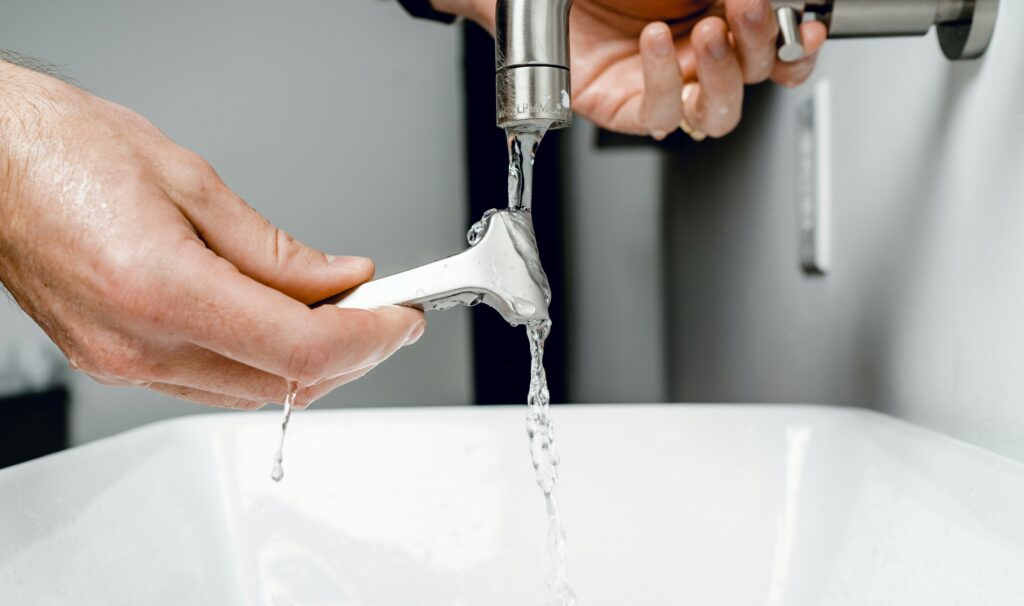
- Faucet Aerators:These are the little screens you screw onto the end of your sink faucets. They cost a few dollars each and can cut a faucet’s flow by 30% or more without you noticing a difference. It’s the cheapest, fastest win in the book.
- The Toilet:If you have a model from the last century, upgrading it is your single biggest water-saving action. Modern designs are powerful and effective. If a full replacement isn’t in the cards, even checking and replacing the flapper inside the tank can stop silent leaks.
- The Big Players:When your washing machine or dishwasher finally gives up, make your next model a high-efficiency (HE) washer They use dramatically less water and energy per cycle.
A Quick Guide: Do’s and Don’ts
| Do’s | Don’ts |
| DO start with a showerhead and aerators—they’re easy and instant. | DON’T assume “low-flow” means weak performance. Test a friend’s or read reviews! |
| DO look for the WaterSense label when shopping. | DON’T ignore a constantly running toilet. A $5 flapper can save 100s of gallons a day. |
| DO check with your local water utility for rebates—they often pay you to upgrade! | DON’T feel you need to do everything in one weekend. One fixture a season is perfect. |
| DO consider it routine maintenance, like changing air filters. | DON’T forget outdoor fixtures! A soaker hose or drip irrigation is a huge saver for gardens. |
FAQs: Your Questions, Answered
Q: Is this really worth it if I’m on city water and my bill is low?
A: Absolutely. First, “low” is relative—those drips and old fixtures add up more than you think. Second, you’re saving the community’s shared resource and the energy to treat and pump it. It’s a civic good deed that also shaves a few bucks off your bill.
Q: Will I have enough water pressure for a good shower?
A: This is the most common worry, and I had it too. The key is to buy a quality, aerating showerhead. I installed one a year ago and my showers are actually better—the stream is denser and more consistent. Read reviews and you’ll be fine.
Q: What is the actual money involved?
A: The amount is not fixed, but according to the EPA, the average household will almost save $400 a year on water and energy bills by installing WaterSense-labeled fixtures. A $30 showerhead with a few months payback is an obvious choice.
Q: Is it possible for me to install these by myself, or will I need a plumber?
A: The majority of these can be classified as classic DIY projects. Showerheads and aerators need only a wrench or pliers. Installing toilets is more demanding, but a daring DIYer with a helper can manage it. If you have doubts, it is wise to engage a professional Plumber in Waco, TX for the toilet installation, but you can certainly do the other installations during a Saturday morning.
Installing water-saving fixtures isn’t a sacrifice. It’s an upgrade. It’s swapping out the inefficient, leaky, outdated parts of your home for something smarter, more reliable, and kinder to both your bank account and the world outside your window. You don’t have to change your habits at all. Just change a few fittings, and let the savings flow.


